


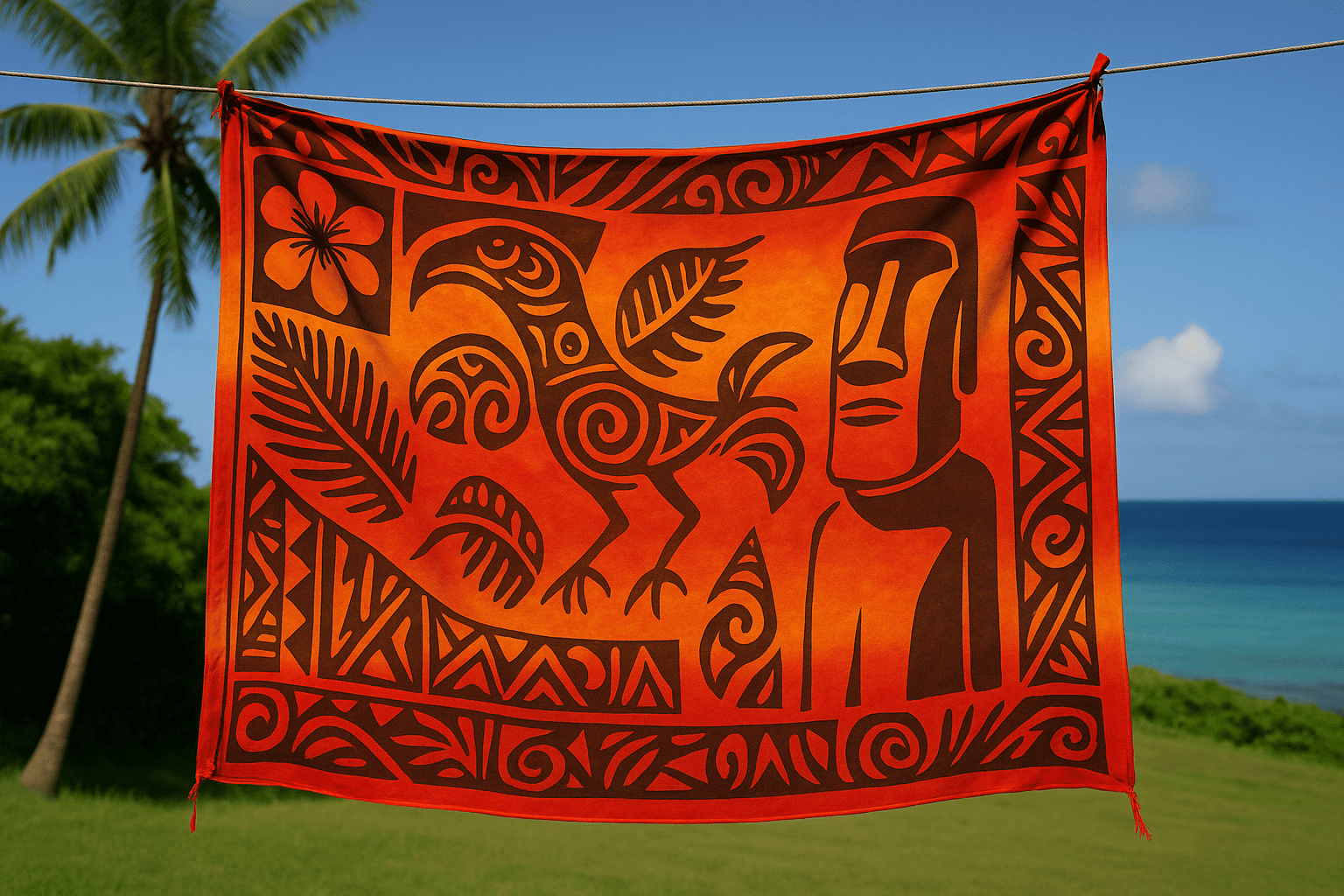
The sarong is an iconic Rapa Nui garment that transcends aesthetics: it represents identity, tradition and functionality. Used both in everyday life and in ceremonial contexts, the sarong reflects the connection between the Rapa Nui people and their environment. In this article, we explore its origin, cultural significance and how it continues to be a living expression of this ancestral culture.
History of Pareo in Rapa Nui
The sarong, also known as pāreu in other regions of Polynesia, has its roots in the Pacific Islands. He came to Rapa Nui as part of the cultural exchange between Polynesian communities.
- Polynesian origins: historically used by men and women in Tahiti, Samoa and Hawaii.
- Adaptation in Rapa Nui: over time, the sarong was adopted locally, incorporating native materials and cultural motifs.
- Traditional materials: it was made with vegetable fibers and dyed with natural pigments, achieving intense and long-lasting colors.
Rapa Nui Pareo Designs and Colors
Rapa Nui sarongs stand out for their visual expressiveness and strong symbolic content. Each design tells a story or represents a sacred element of the island.
Outstanding features:
- Natural motifs: endemic flowers, seabirds and shapes inspired by the sea and volcanoes.
- Ancestral patterns: geometric figures and traditional symbols such as the komari (fertility symbol) or stylized moai shapes.
- Vibrant colors: reds, oranges, turquoises and greens predominate, associated with energy, nature and spirituality.
How to use the sarong?
One of the reasons for the popularity of the sarong is its practical and aesthetic versatility. It is a functional garment that can be adapted to multiple uses with creativity and elegance.
Common forms of use:
- As a skirt or dress, knotted at the neck or waist.
- Shawl or light cape style over the shoulders.
- In men, used as a ceremonial belt or loincloth.
Pareo in Tapati and other celebrations
During the Tapati Rapa Nui, the main cultural festival of the island, the sarong becomes the protagonist. This celebration, which takes place every February, stands out for exalting the roots and traditions of the Rapa Nui people.
- Traditional dances: the sarong is an essential part of the dance costume.
- Ancestral competitions: used in endurance tests and ritual ceremonies.
- Cultural expression: each participant chooses sarongs that represent his or her lineage or tribe, reinforcing the sense of belonging.
Where to buy sarongs in Rapa Nui?
If you visit the island, to wear an authentic sarong is to wear a piece of living culture.
Recommended points:
- Handicraft markets in Hanga Roa.
- Local stores with handmade products.
- Tapati Fair, where many local artists sell unique editions.
The sarongs available for tourists combine traditional techniques with contemporary touches, making them a valuable and meaningful souvenir.
The rapa nui sarong is not just a garment, but a symbol of heritage, community and creativity. Its history, its designs and its role in the cultural life of Rapa Nui make it an indispensable element to understand the island’s identity.
If you are interested in learning more about the Rapa Nui culture, we invite you to read other articles in our blog dedicated to their traditions, art and historical legacy.
If you are thinking of visiting Rapa Nui and want to visit every corner accompanied by native guides, we invite you to see our list of tours.
