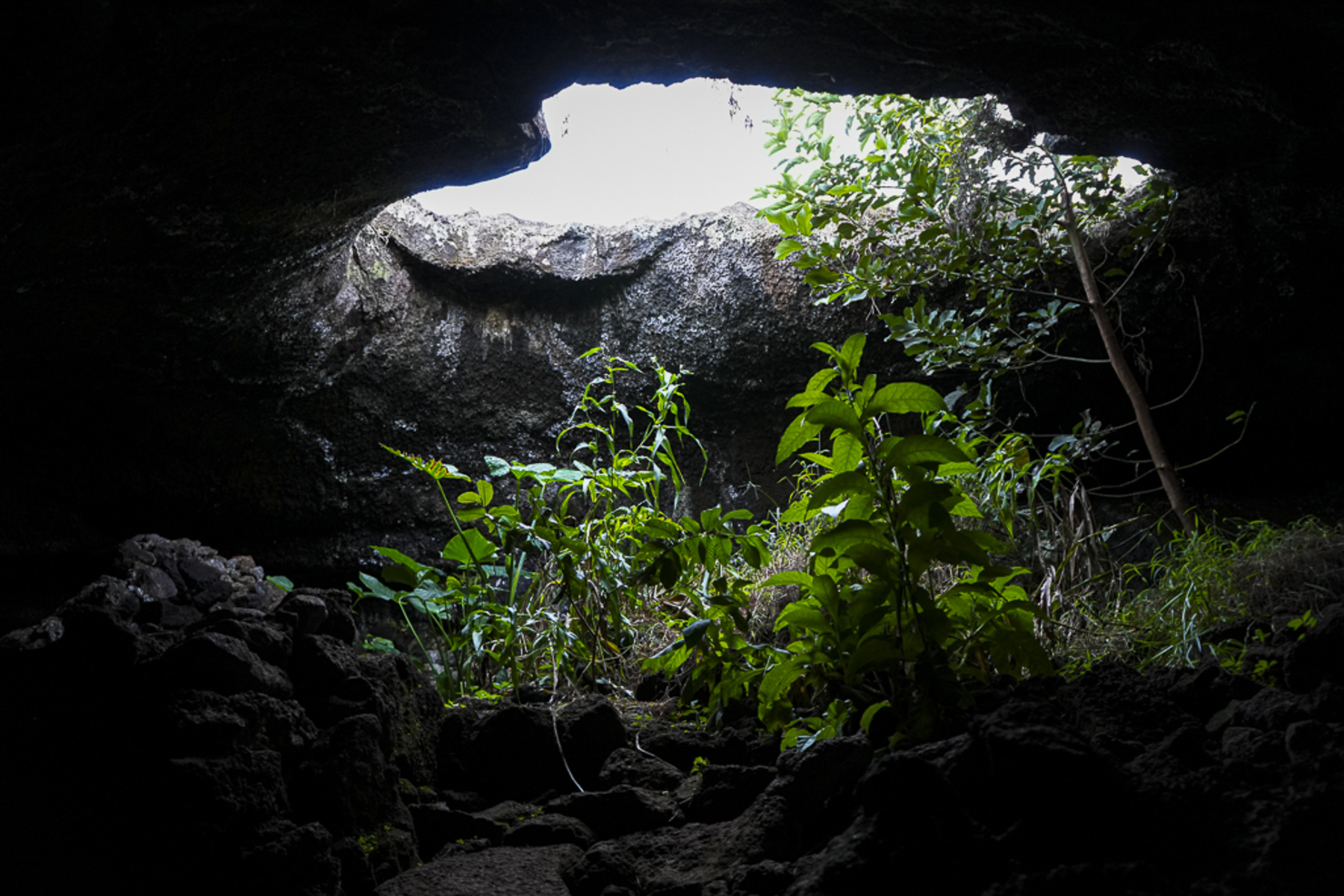
Located in the foothills of Maunga Terevaka, Ana Te Pahu is the largest cave in Rapa Nui (Easter Island). It is an impressive volcanic tube formed by ancient eruptions, which combines geological, historical and agricultural value. Also known as the “Cave of Bananas”, it is one of the most fascinating subway destinations on the island.
Geological origin of Ana Te Pahu
This cave system originated thousands of years ago from eruptions of the Maunga Hiva Hiva volcano. The solidified lava formed a network of interconnected tunnels and chambers that extend for more than 7 kilometers, making Ana Te Pahu the longest volcanic tube on the island.
Historic uses: shelter, housing and water source.
For centuries, Ana Te Pahu was used by the ancient Rapa Nui as a:
- Natural housing: protected from extreme weather and possible conflicts.
- Community kitchen: evidenced by the presence of umu pae (stone ovens).
- Rainwater tank: naturally filtered through the rocky soil.
These characteristics made the cave a vital survival space for the ancestral communities.
The cave of banana trees: a natural nursery
Ana Te Pahu owes its nickname to the abundance of banana trees at its entrance. The combination of moisture, fertile soil and protection from the wind turned the cave into a manavai, a traditional agricultural system used to grow crops:
- Bananas
- Parras
- Tubers and other foods
This environment shows how the Rapa Nui integrated their agricultural knowledge with the volcanic landscape of the island.
Tips for exploring Ana Te Pahu
- Access: you enter through a natural opening where the lava roof has collapsed.
- Recommendations:
- Carry a flashlight or headlamp
- Wear shoes with good grip
- Explore in company for safety
Inside you will find tunnels formed by lava, wet walls and vegetation that provides a unique and mystical atmosphere.
How to get to Ana Te Pahu?
From the center of Hanga Roa:
- Take Ara Roa Rakei Street towards Ahu Akivi.
- From that point, you can continue on foot or by bicycle.
- Present your Rapa Nui National Park ticket at the checkpoint before entering.
The route is easy to access and well signposted, ideal for those seeking to combine nature, history and physical activity.
Ana Te Pahu is not only an outstanding geological phenomenon, but also a reflection of the ingenuity and adaptation of the Rapa Nui culture. Visiting this cave is an opportunity to understand the relationship between nature, history and agricultural tradition in Rapa Nui.
If you are interested in learning more about the secrets of the island, explore our Easter Island tours to discover other subway, archaeological and natural wonders.