


ART AND CULTURE, HISTORY, TOURISM
Rano Raraku: The moai factory
The Rano Raraku volcano is one of the most extraordinary and captivating archaeological sites in the world. In this place, full of mystery and magic, the moai, the impressive statues that have made Easter Island world famous, were sculpted. The majestic figures and the quarries of the volcano exceed all expectations, leaving visitors speechless before one of the most fascinating wonders of humanity.
Maunga Eo: The perfumed hill
Rano Raraku, formerly known as Maunga Eo, is located 20 km northeast of Hanga Roa, near the Poike Peninsula and approximately 1,000 meters northwest of Hanga Nui Bay. Its unique shape and position offer impressive views from Tongariki and from its hillside, providing a panoramic perspective of great beauty.
Geological origin of the volcano
This extinct volcanic cone was formed more than 300 thousand years ago by the eruptive activity of the Maunga Terevaka and Pua Katiki volcanoes. With a maximum height of 160 meters and an elliptical caldera 700 meters in diameter, Rano Raraku houses a freshwater lagoon 3 to 4 meters deep inside. The northern slope descends gently, while the southern slope rises steeply, ending in a sheer cliff that forms a fascinating geological landscape.
Toba Lapilli: The unique raw material
Rano Raraku is composed of lapilli tuff, a porous rock formed by the accumulation of volcanic ash. This tuff is softer than basalt, which made it easier for ancient sculptors to carve the huge moai. The quarry is located mainly in the southeastern half of the volcanic cone, where the tuff is concentrated, while the northern half has harder volcanic materials.
The moai workshop
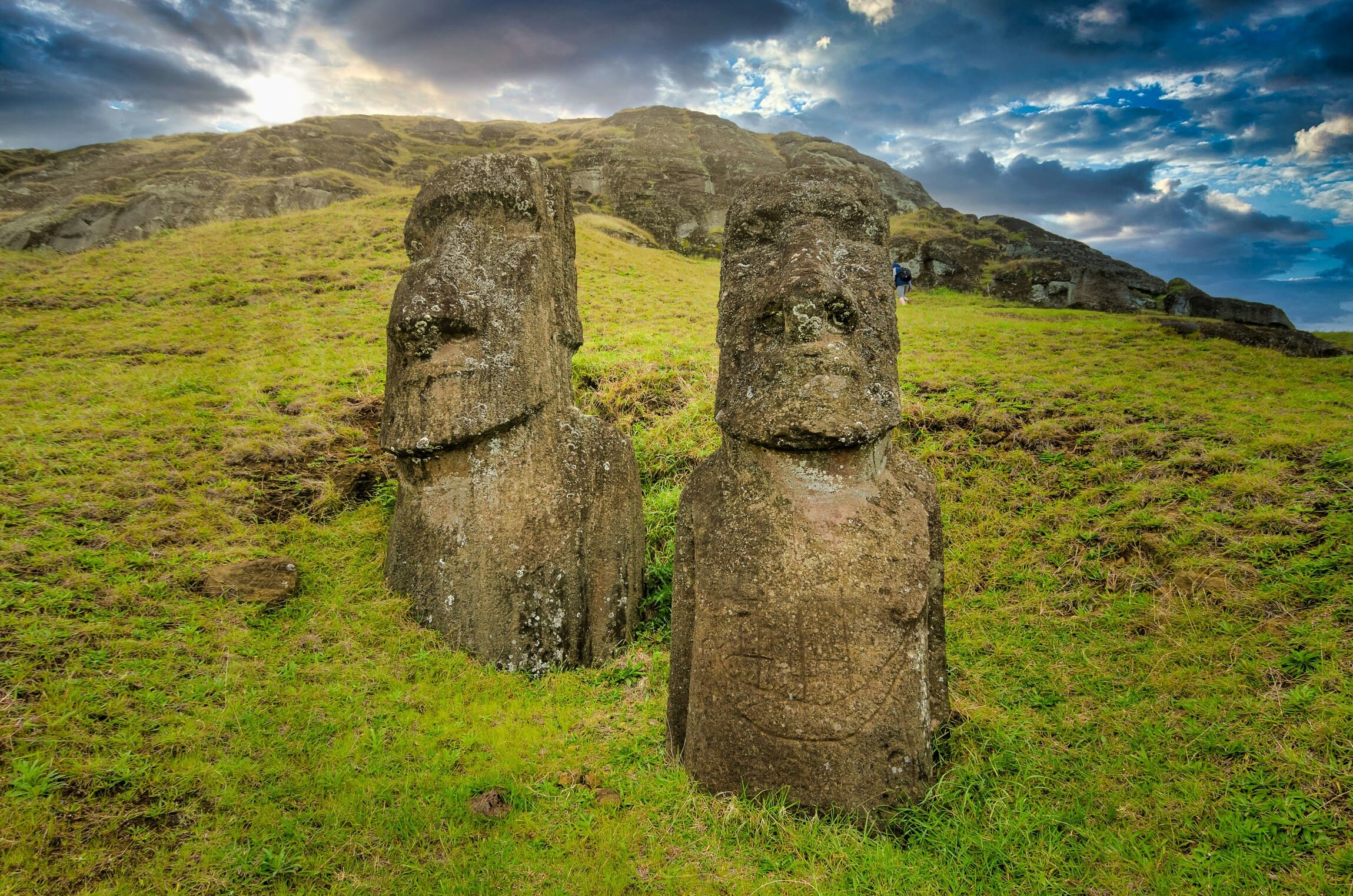
Rano Raraku was the main quarry where almost all of the island’s moai were carved. Here they were carved and then transported to the ahu, ceremonial platforms located along the coast. Walking along the southern slope of the volcano, dozens of moai heads can be seen protruding from the ground, with statues in different stages of elaboration.
Would you like to tour the island, its corners and learn more about its amazing history? Check out our tours with native guides.
The sculpting process
The sculptors chose a suitable sector and began to carve the rock until a rectangular block was obtained. Then, they carved the statue from head to toe, finally releasing it from its niche by means of perforations and wedges. After carefully descending the slope, the moai were placed in holes where the carving of the back was completed and the figure was polished.
The mystery of abandonment
Work at Rano Raraku spanned more than 500 years, beginning around 1000 A.D. and ending in the mid-18th century. Several theories attempt to explain the abrupt cessation of activity, from rebellions and natural cataclysms to changes in beliefs and tribal conflicts.
The famous heads of Easter Island
The image of the half-buried moai heads at Rano Raraku is iconic. These complete statues were gradually buried by sediments, protecting them from the elements and preserving their original details. Recent excavations have revealed engravings on the backs of some moai, showing the sophistication of the ancient sculptors.
Statues with their own name
Some statues at Rano Raraku have unique and significant names, such as Tai Hare Atua, Piro Piro, and Hinariru. Each moai has distinctive features and details that give it a unique personality.
Tai Hare Atua: The First Moai
This primitive statue shows a head fused to the torso, without a neck, and is believed to be the first to be carved at Rano Raraku.
Piro Piro: The huge head
With a prominent nose and a unique posture, Piro Piro is one of the most widespread images of the island, standing out for its size and details.
Hinariru: The Moai of the twisted neck
Hinariru is known for its graceful head tilt, which gives it a distinctive and elegant appearance.
Te Tokanga: The giant
At almost 22 meters long and weighing an estimated 200 tons, Te Tokanga is the largest statue ever sculpted on Easter Island.
The crater and the inner lagoon
The inland lagoon of Rano Raraku, surrounded by statues and rich in vegetation, is one of the main wetlands of Rapa Nui. This place, with its tranquil atmosphere and full of history, is a testimony to the skill and dedication of the ancient inhabitants of the island.
Tips for visiting Rano Raraku
The visit to Rano Raraku can be done by hiring excursions or on your own. It is necessary to purchase the entrance to the Rapa Nui National Park and follow the marked trails to protect this historic site. It is recommended to wear comfortable clothes, appropriate footwear and drinking water to fully enjoy the experience.
Rano Raraku is about 20 km from Hanga Roa and can be reached by car, bicycle or on foot. From Hanga Roa, take the road to Anakena and then follow the signposted turnoff to the Rano Raraku visitor center.
Exploring Rano Raraku is an unforgettable experience that allows visitors to connect with the history and mystery of Easter Island, admiring the imposing statues that have fascinated the world for centuries.
Ready to experience Rapa Nui like never before? Follow our social networks to receive exclusive updates and tips for your next visit.