


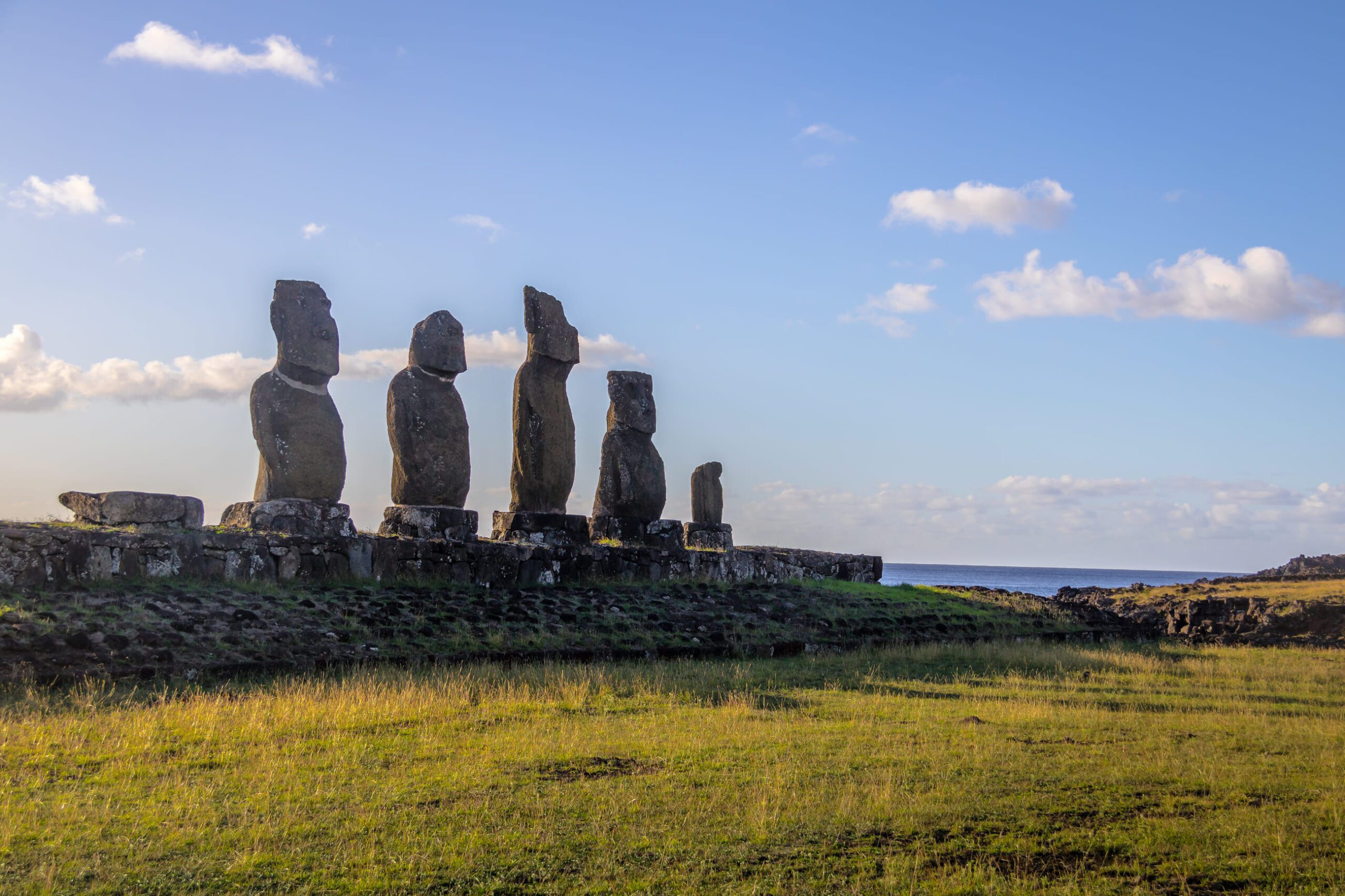
The must-sees of Rapa Nui
Ana Te Pora is one of the many hidden caves of Rapa Nui, but is distinguished by its natural beauty and historical value. Located on the northwest coast of the island, this cavern is part of the cave system of the Roiho sector. Its attraction lies both in its geological formation and its ancestral use, which make it a fascinating destination for those seeking to delve into the history and nature of Easter Island.
Characteristics of Ana Te Pora
Geological formation:
Ana Te Pora is a lava tube, the result of the volcanic eruptions that shaped Rapa Nui. During these eruptions, the lava flow cooled on the surface while continuing to advance inside, creating tunnels and natural cavities that, over time, were transformed into the caves we know today. The cave walls show the passage of lava in unique striations and textures, a reminder of the island’s volcanic origin.
Historical use:
In addition to its natural beauty, Ana Te Pora has a significant historical value. It was used as a shelter and dwelling by the ancient inhabitants of Rapa Nui. Inside the cave, archaeological remains have been found, such as fragments of umu pae (stone ovens) and lithic tools, suggesting that the ancient Rapa Nui performed daily and ceremonial activities inside the cave. The cave was probably a safe place during times of conflict, and its hidden location made it ideal for shelter from the elements and possible external threats.
Exploring Ana Te Pora
Access and route:
To access Ana Te Pora, follow a trail that descends near a cliff on the coast. The route is scenic, with views of the ocean accompanying the path to the cave entrance. Because the access is somewhat steep and the cave itself is dark, it is recommended to bring a flashlight and appropriate footwear, as the terrain can be uneven and slippery in some areas.
Interior features:
The interior of Ana Te Pora is spacious and cool, with geological formations that show the diversity of textures left by the lava flow. The walls of the cave are marked with patterns reminiscent of the movement of magma, and in some sections you can see stalactites and stalagmites, which have formed over time thanks to the filtration of water. These natural elements create a mysterious and beautiful environment, ideal for those who enjoy exploring places full of history and natural beauty.
How to get to Ana Te Pora?
To get to Ana Te Pora, head from Hanga Roa to the Roiho sector. The cave is located a few kilometers from the center of town, and is accessible both on foot and by bicycle. The route to Roiho is scenic and allows you to enjoy the island’s landscapes, making the hike a pleasant and enriching experience. Locals can be of great help in pointing out the exact route, as they know the area well and can offer additional recommendations.
- Bring a flashlight and appropriate footwear: The cave is dark and the terrain can be slippery, so it is important to be prepared.
- Explore with respect: Ana Te Pora is a site of historical importance, so be careful not to leave trash or disturb the natural environment.
- Consult a map or ask the locals for directions: The islanders know the cave well and can help you find the best way.
- Enjoy the scenery: The hike to the cave is a scenic route, so take the time to enjoy the ocean views and volcanic landscapes.
Ana Te Pora is a hidden gem of Rapa Nui, a place that combines nature, history and mystery in a unique environment. Its geological formation, its ancestral use and the breathtaking views it offers make it a must-see destination for those seeking to know the most intimate side of Easter Island. If this blog has piqued your interest, keep exploring the secrets of Rapa Nui and discover all the wonders that this mystical island has to offer.
If you are planning your visit to the island, and you want to visit every corner accompanied by native and expert guides, we invite you to see our list of tours and contact us.