


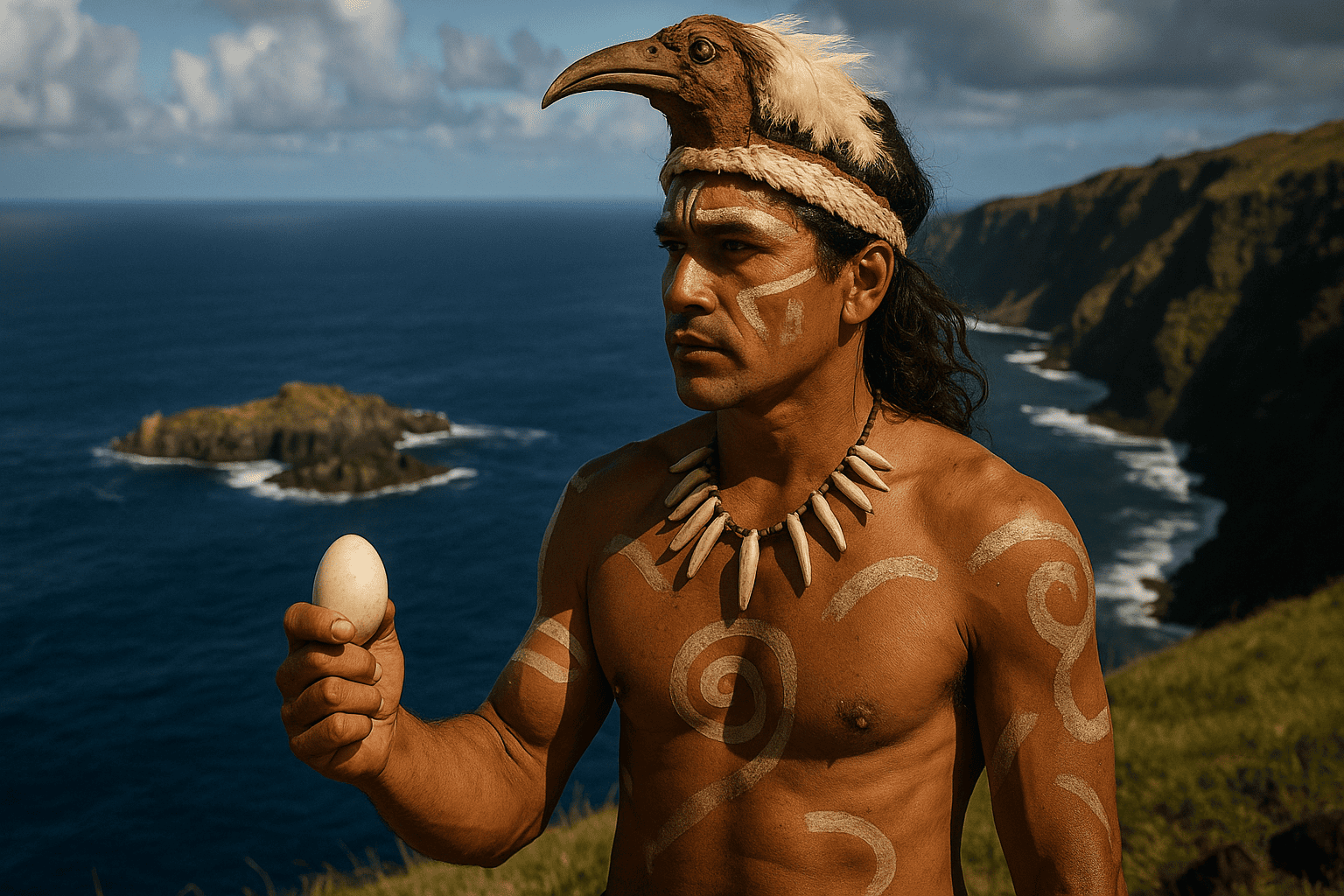
The Birdman competition, known as Tangata Manu, is one of the most emblematic and enigmatic rituals of the ancient Rapa Nui culture. This ceremony combined spirituality, leadership and physical endurance in a competition that defined power on the island. In this article, we explore its history, rules and cultural relevance to this day.
Origins of the Birdman in Rapa Nui
The Birdman ceremony was held annually in Orongo, a ceremonial site located on top of the Rano Kau volcano. Its function was to elect the new spiritual and political leader of the island, replacing the previous tribal chieftainship system.
Key data:
- Period: 17th to 19th centuries, after the decline of the Moai cult.
- Location: Orongo ceremonial village, in front of Motu Nui, Motu Iti and Motu Kao Kao islets.
- Purpose: Selection of the Tangata Manu, leader who received temporal power and divine prestige.
Birdman Competition Rules
The competition was extremely dangerous and required courage, skill and physical strength. Each clan selected a representative, usually an agile young man, who competed on behalf of the chief of his tribe.
Stages of the competition:
- Descent from Orongo by cliffs to the sea.
- Swimming in the open sea to Motu Nui (more than 1.5 km).
- It waits vigilantly for the laying of the first egg of the manatee (migratory gull).
- Transport of the egg back, attached to the body, without breaking it.
- Final ascent to Orongo and delivery of the egg to the boss.
The chief of the winning competitor was named Tangata Manu and ruled the island for one year, under the spiritual mandate of Make-Make, the main Rapa Nui deity.
Cultural Significance of Tangata Manu
The figure of the Birdman is a profound symbol of renewal, connection with the divine and legitimate leadership.
- Spirituality: the manutara egg was considered sacred.
- Political power: the Tangata Manu obtained privileges, land and authority.
- Sacrifice: many participants died in the attempt, which reinforced the ritual and extreme nature of the competition.
The Birdman on Tapati Rapa Nui
Today, the Birdman competition is symbolically reenacted during the Tapati Rapa Nui festival, held in February.
- Allusive activities: physical competitions, ancestral theater and oral presentations.
- Modern objective: to preserve history and pass it on to new generations.
Presence of the Birdman in Today’s Culture
Although the original competition ceased to be practiced after the Christianization of the island in the 19th century, its legacy is still present.
Forms of contemporary representation:
- Sculptures and rock art at Orongo and other archaeological sites.
- Decorative motifs in local handicrafts, tattoos and ceremonial clothing.
- Symbol of identity in festivities, cultural products and heritage tourism.
Conclusion
The Rapa Nui Birdman competition is a unique tradition that blends mythology, politics and ritual sport in a singular expression of the Rapa Nui soul. If you wish to continue discovering the richness of this living culture, we invite you to explore our other articles about Rapa Nui.
Are you visiting Rapa Nui, and you want to visit every corner accompanied by native guides? We invite you to see our list of tours.